Solar Water Heating in Nairobi: Is It Worth It?
Water heating is one of the biggest energy demands in a home, and in Nairobi the resource to meet it sits on the roof: the sun, almost directly overhead, month after month. Solar water heating is mature, proven technology — but whether it is worth it for your specific property depends on a few practical questions. This guide gives you those questions, without the sales talk.
How a solar water heating system works
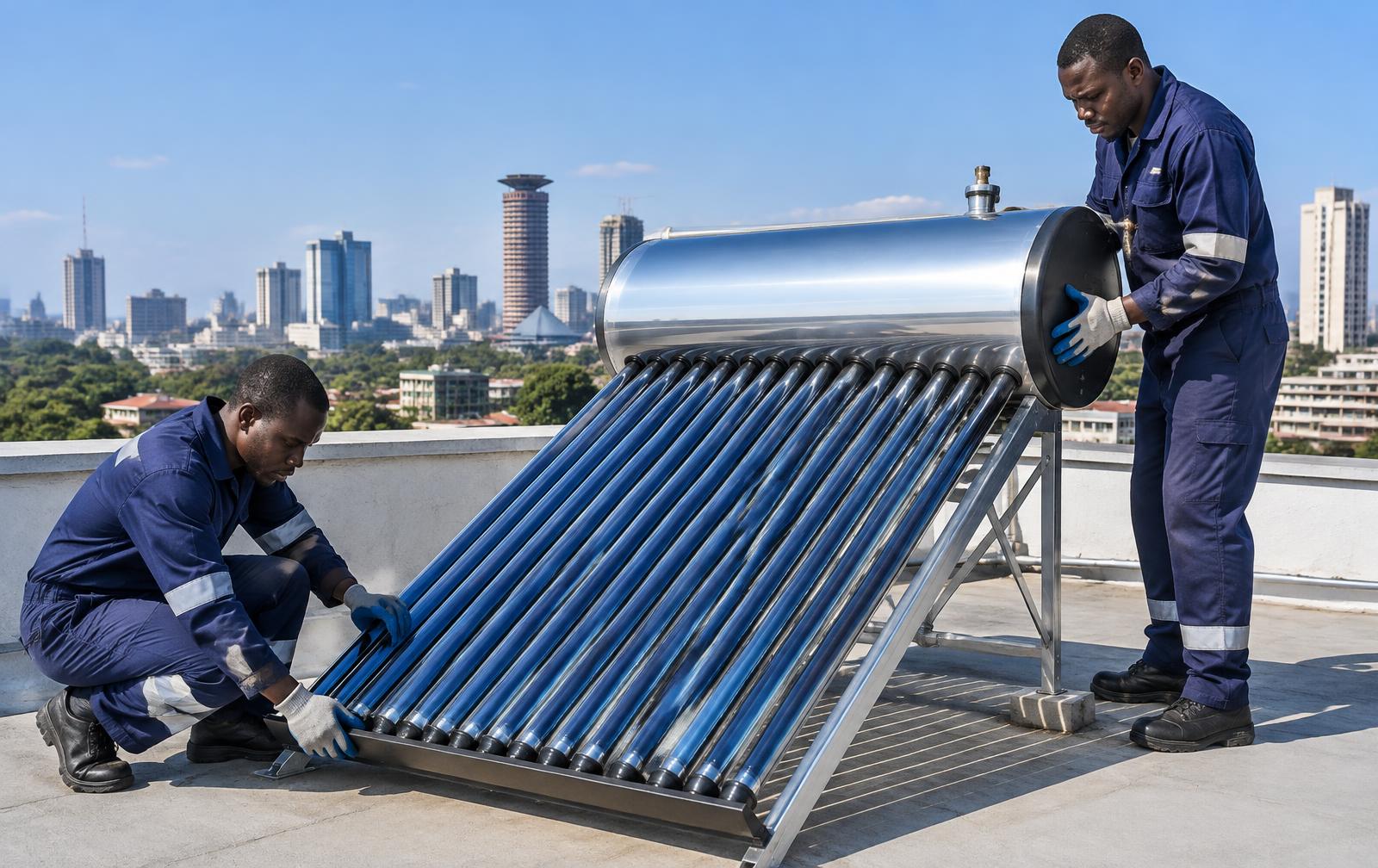
A collector on the roof absorbs solar energy and transfers the heat to water — either directly in the collector or through a closed loop — which is stored in an insulated hot-water cylinder. Systems are either thermosiphon (the warm water circulates naturally, with the tank mounted above the collector) or pumped (a small controller-driven pump moves the heat-transfer fluid, allowing flexible tank placement). Most systems include an electric element as backup for consecutive overcast days, which means hot water is never a gamble.
Why Nairobi is good solar territory
Nairobi sits almost on the equator at altitude: strong, consistent sunshine through the year and no extreme winter to design against. That combination suits both collector types — flat-plate panels, which are robust and lower cost, and evacuated-tube systems, which hold performance better in cool, cloudy conditions. The practical consequence is that a correctly sized system covers most hot-water needs for most of the year across the city, with the backup element filling the occasional gap.
What decides whether it is worth it for you
The economics hinge on how much hot water the property actually uses and what it costs to heat that water today. A household running multiple electric showers, a busy kitchen and a laundry is a strong candidate; a house where the hot tap runs twice a week is not, whatever the technology. The roof matters too: collectors need an unshaded orientation with reasonable sun exposure through the day, and a structure sound enough to carry them. Retrofits are usually straightforward on pitched and flat roofs alike, but it is a plumber's job to confirm the pipework route between collector, cylinder and existing outlets.
Sizing, backup and maintenance
Sizing is the difference between satisfaction and disappointment: an undersized system leans on the electric backup every evening, eroding the benefit; an oversized one costs more than its extra contribution justifies. Plan capacity around the real number of occupants and bathrooms, not a generic panel-per-roof rule. Maintenance is modest — occasional collector cleaning, an annual check of glycol levels, seals, valves and the backup thermostat — but it is maintenance a plumber should do, not a panel installer who cannot service the pipework side.
Our honest answer
For most Nairobi homes and institutions with meaningful daily hot-water demand and a workable roof, solar water heating is worth it — the climate does the heavy lifting, the backup removes the risk, and the system quietly pays for itself in avoided heating energy over its life. It is not worth it where hot-water use is light or the roof is heavily shaded. If you share your building's details, we will tell you honestly which case you are in, and quote the system properly if it stacks up.
How we can help
- Learn about our solar water heating systems services
- Learn about our pipework services services
- Learn about our plumbing repairs services
Or call us directly on 0742 300 555 — we are happy to talk it through first.