Borehole Drilling in Nairobi: What to Expect, Step by Step
A borehole is the most independent water supply a property can have — no bills, no rationing, no tanker queues. It is also a significant project with real decisions at every stage, from the initial survey to the pump that finally feeds your tank. This guide walks through the whole process in the order it actually happens, so you know what to expect before the rig arrives.
Step 1: Site assessment and water survey
Drilling starts on paper, not in the ground. A hydrogeological assessment of the site — geology, neighbouring boreholes, expected depth and yield — decides where the borehole should go and what to budget for in depth. Skipping the survey is the classic false economy: a badly sited borehole can hit poor yield or poor quality water, and moving a rig after the fact costs far more than the survey ever did.
Step 2: Permits and regulations
In Kenya, drilling and abstracting groundwater are regulated activities, and permits are required before drilling begins — your drilling contractor should guide you through the applications and what they entail. Treat a driller who waves off the paperwork as a warning sign: unpermitted boreholes create serious problems for the property later, including at resale.
Step 3: Drilling, casing and gravel packing
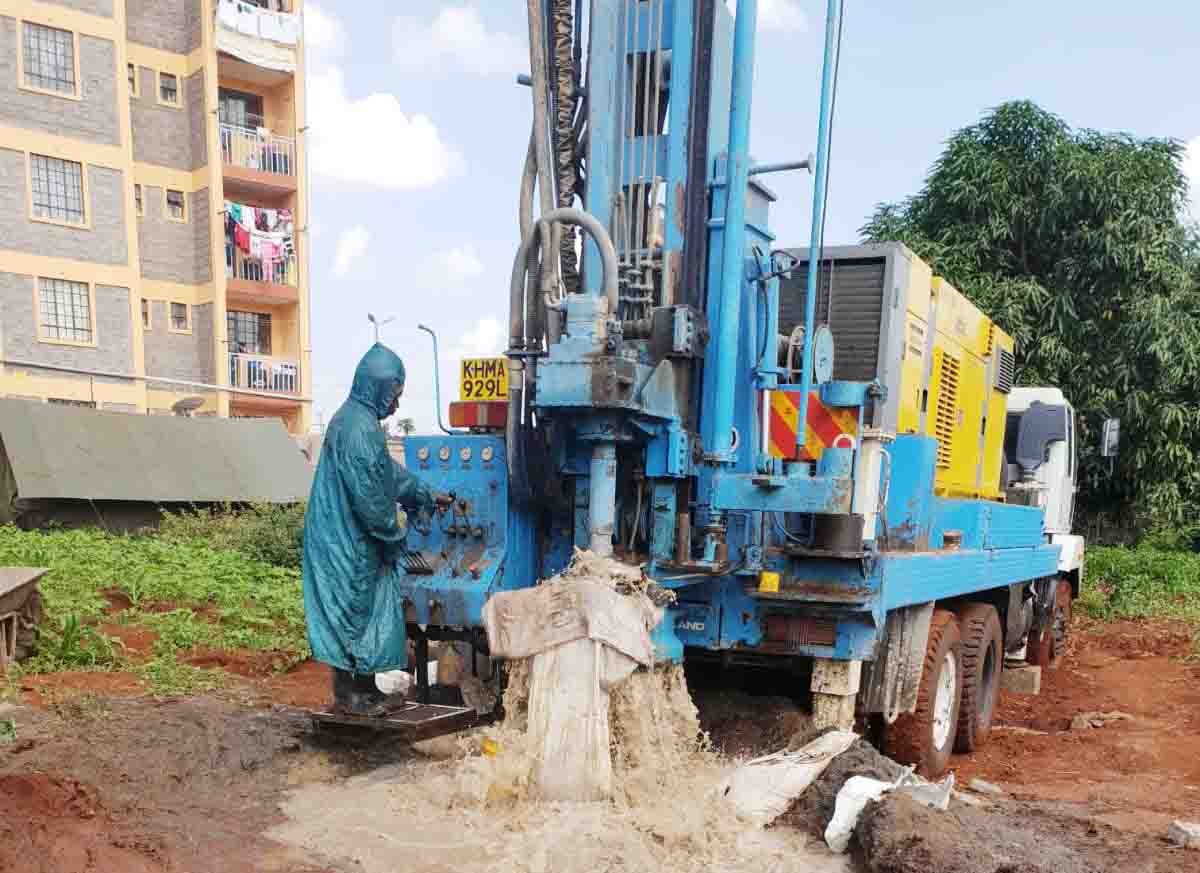
The rig drills through soil and rock to the target depth, then the borehole is cased — lined with steel or uPVC casing to keep the walls from collapsing — with a slotted section (the screen) placed against the water-bearing zone and a gravel pack around it to keep fine sediment out. This stage determines how long the borehole stays clean; rushing it shows up within months as a pump clogged with sand.
Step 4: Test pumping and yield
Before anything is installed, the borehole is test-pumped: run for a sustained period to measure the sustainable yield — how much water it can give continuously, not just in the first excited minute. The test also tells you the drawdown and recovery behaviour, which sizes the pump correctly. A pump chosen from guesswork either starves the building or burns itself out cycling in a weak bore.
Step 5: Pump, storage and distribution
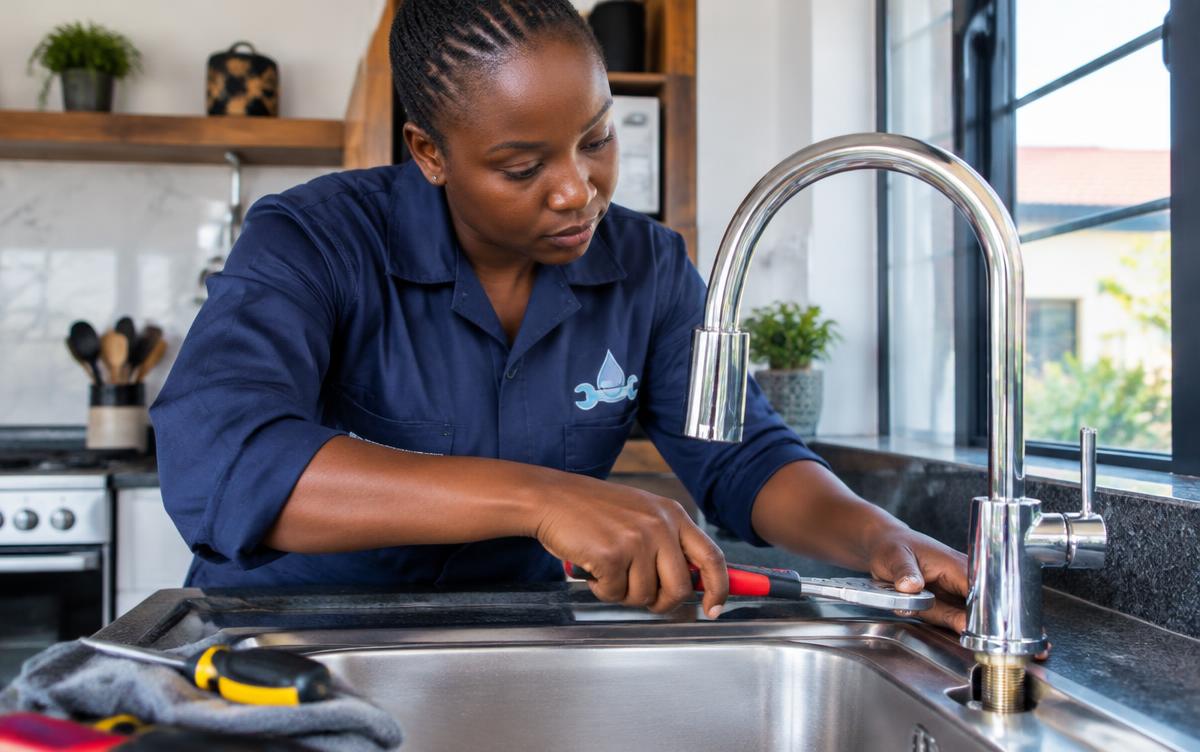
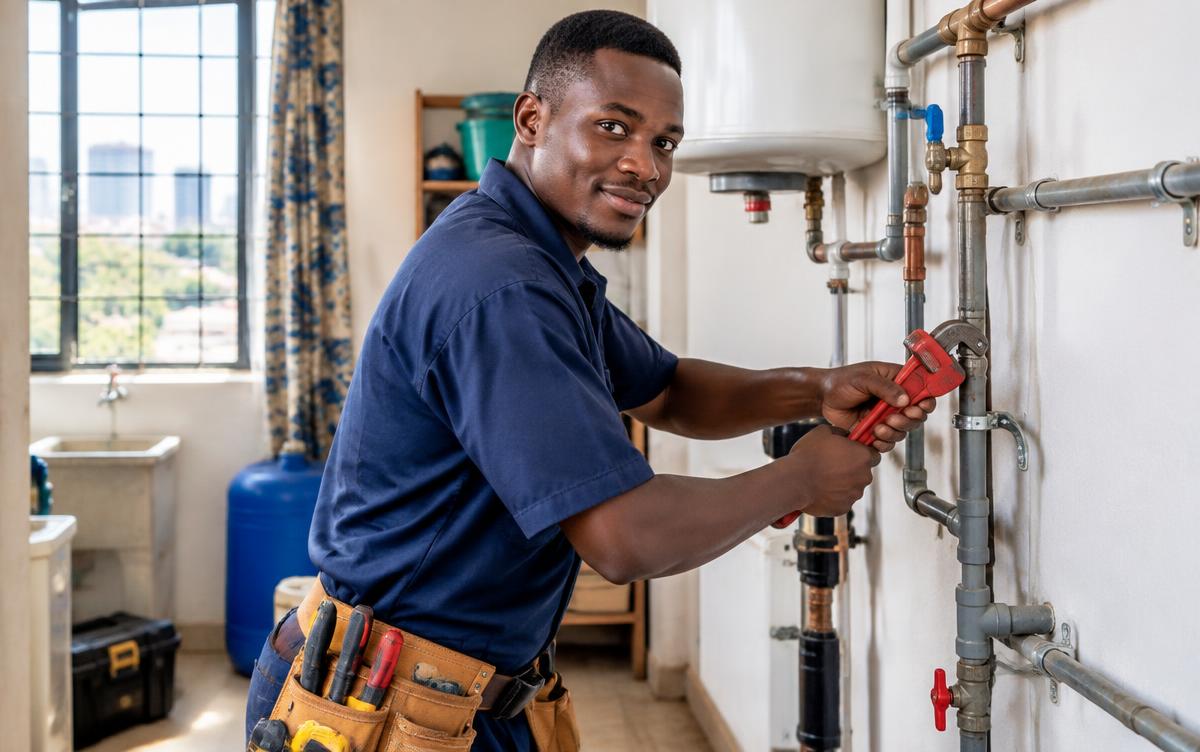
The borehole itself is only half the system. A submersible pump matched to the tested yield lifts water to storage — usually a tank elevated for gravity pressure or paired with a booster pump — and from there the supply is piped into the building's existing cold-water system, often with a pressure vessel and controls to protect the pump from dry running. This is the stage where borehole work overlaps with proper pipework and pump installation, and where an integrated plumbing company earns its keep: one team designs the source-to-tap system instead of handing over a hole and a pump.
Step 6: Water quality testing
Borehole water is not automatically drinking water. Have it tested — for mineral content, hardness and bacteriology — before deciding what treatment it needs, if any. The test result also guides what the water will be used for: irrigation and cleaning tolerate what household use does not, and installing the right treatment once is far cheaper than discovering the problem through limescale, staining or illness.
How we can help
- Learn about our borehole drilling services
- Learn about our water pump installation & repairs services
- Learn about our pipework services services
Or call us directly on 0742 300 555 — we are happy to talk it through first.